An international Tantra teacher based in Rome: this is who I imagine becoming.
My two weeks in Italy gave me more than I expected. I found people, connections within the Tantric community and a clearer idea of how I might move there. I began to see the lifestyle I wanted and the practical resources it would require.
The ideal picture looks like this.
I live in a beautiful central apartment in Rome, perhaps near the Vatican, with two bedrooms and a generous living room. Friends from around the world, travellers and couchsurfers come to stay.
I have a suitable student or self-employment visa. I lead workshops in Rome and work in English as a Tantra teacher based in Italy. A community forms around the work, and I become known within the wider European Tantra world. I meet a local community too and share life with them. Perhaps that is even where I meet a future partner.
The road feels both beautiful and understandable.
What the journey showed me
In Milan, Gill and I spoke at length about life in Italy: work, rent and the cost of living in different regions.
In Venice, I remembered how good it feels to meet Italy alone, through architecture and art. I tasted the first real dolce vita of the trip, wandered through Venice at night with Joseph Brodsky’s poetry in my headphones and visited his grave on San Michele the next morning.
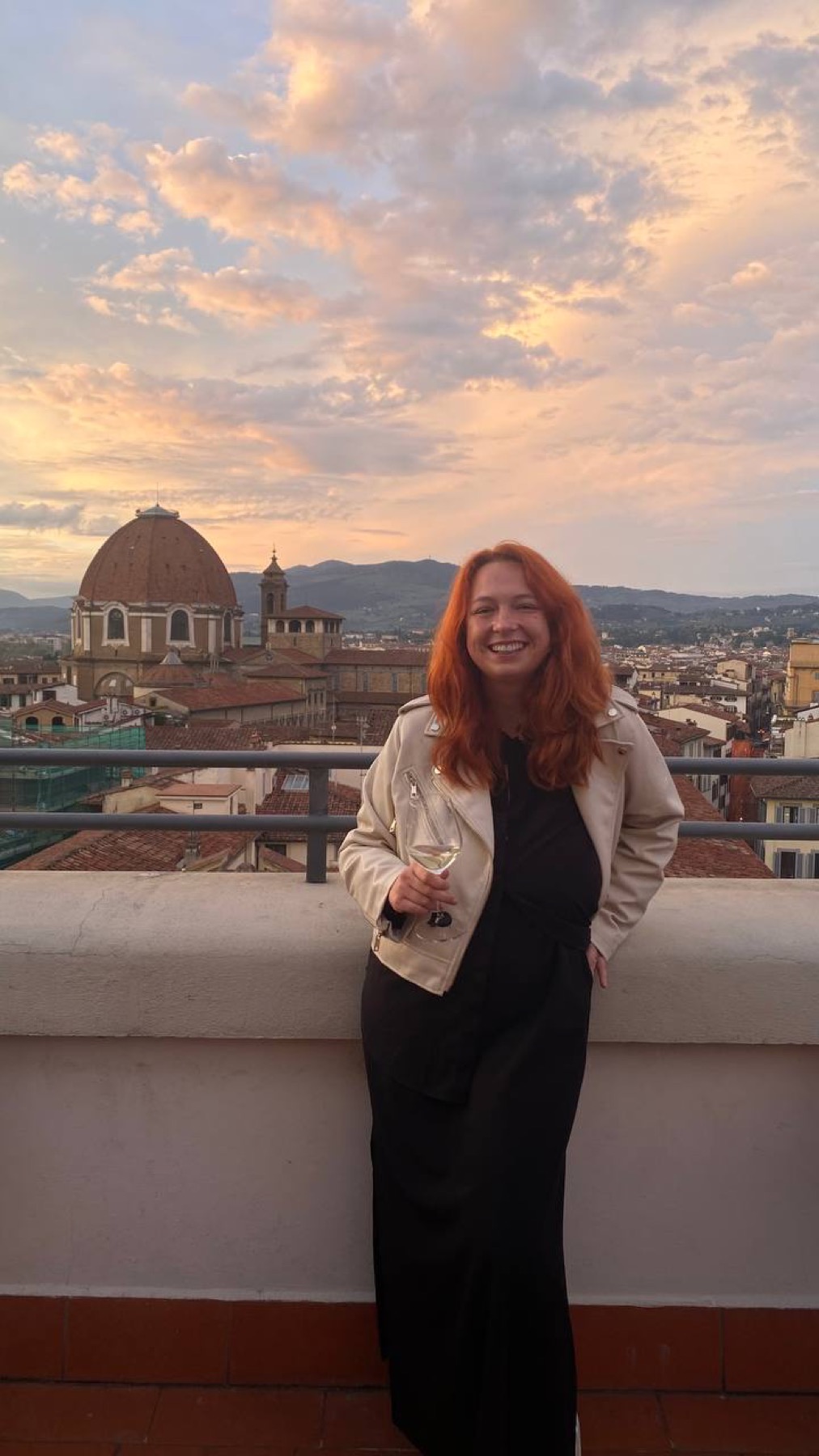
Florence deepened my relationship with Italian art and brought new people into the story. Through Couchsurfing, Mario invited me to a rooftop aperitivo at sunset overlooking the Duomo. I met people from England, Georgia, America and several regions of Italy.
One of them was Federico, who had practised Tantra for years and knew the local community well. He recommended several Italian festivals. Meeting another Tantric practitioner by chance on a Florence rooftop felt wonderfully unlikely.
Rome revealed a spiritual depth in my relationship with Italy. I arrived on the day Pope Francis died, which shaped the experience strongly. Although I am outside the Catholic tradition, I often feel the spiritual current of a religion when I meet it closely.
I joined the pilgrims, walked through the Holy Door and stayed for Mass at Saint Peter’s Basilica. Nuns had arrived from many parts of the world. The women beside me had travelled from Africa for the Jubilee Year and the same passage through the Holy Door.
My host in Rome was a Brazilian man who had lived in Italy for ten years and was completing a PhD at Sapienza University. Our conversations made me seriously consider studying at an Italian university. A week later, I learned that his home stood one block from Sapienza’s psychology faculty.
From Rome, I travelled to the village of Rocca di Botte to visit my friend Katya. She introduced me to Vova, who had bought a four-bedroom house and hoped to turn it into a gathering place for interesting people.
Again and again, the trip offered a person, place or coincidence that made this possible future feel more concrete.
I came home with an image of a life: rooted in Rome, connected across borders and spacious enough for teaching, friendship, art and the people I love.